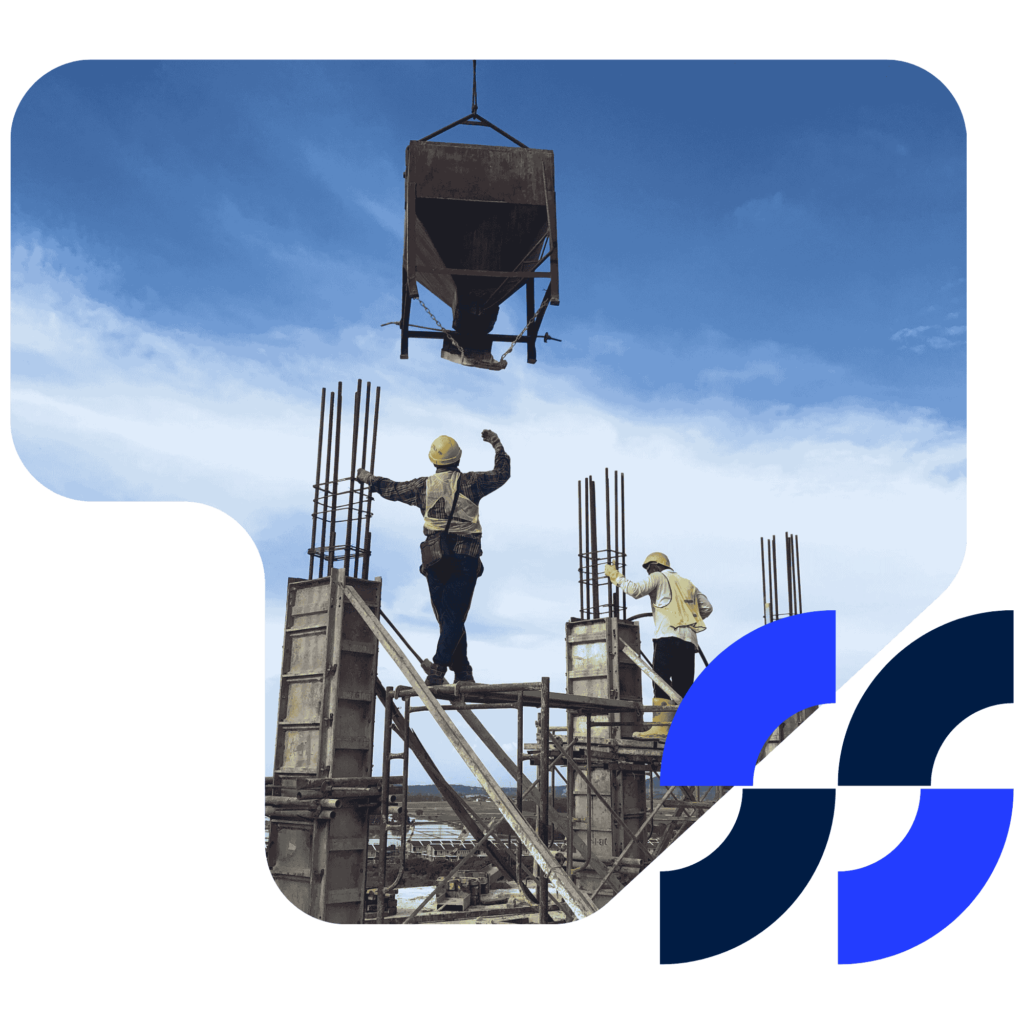
Access experienced international talent when the skills your business needs are difficult to find locally.
Irish businesses across construction, engineering, automotive, manufacturing and other skilled sectors are competing for experienced workers. International recruitment can give employers access to a much wider talent pool while creating a sustainable solution to persistent skills shortages.
Recruiting locally should always be part of a strong workforce strategy. But what happens when the people you need simply aren’t available?
When skilled workers are difficult to find, the impact can spread quickly across a business. Vacancies stay open for longer, recruitment costs rise and employers find themselves competing repeatedly for the same limited pool of experienced workers.
That can lead to project delays, increased pressure on existing teams and missed opportunities for growth. In some cases, businesses may even have to turn down work or delay expansion simply because they cannot recruit the people they need.
Why Hire International Skilled Workers?
Access a Larger Talent Pool
Your recruitment market is no longer limited by geography.
International recruitment allows employers to search for experienced workers with the
specific skills, qualifications and experience their business requires.
Fill Hard-to-Recruit Roles
Some positions can remain vacant despite repeated advertising and recruitment campaigns.
Expanding the search internationally means businesses can look in markets where those skills are more readily available.
Support Business Growth
Lack of labour can become a genuine growth constraint.
International recruitment can give employers additional workforce capacity to accept contracts, expand operations, increase production or deliver major projects.
Build Your Workforce for the Long Term
International recruitment can form part of a longer-term workforce strategy, helping
businesses develop a sustainable pipeline of skilled people rather than repeatedly
reacting to vacancies.
Recruit for Skills, Not Just Availability
Construction
Carpenters, joiners, plumbers, electricians, welders, pipefitters and other experienced trades.
How Does Hiring International Workers in Ireland Work?
Hiring a worker from overseas involves more than simply finding a suitable candidate.
Employers need to consider the position being recruited, employment permit eligibility, candidate suitability, immigration requirements and the practicalities involved in relocating someone to Ireland.
Workforce Requirement
International Recruitment
Candidate Assessment
Employment Permissions
Relocation
Employment
Employment Permits for International Workers in Ireland
Many non-EEA nationals require an employment permit before they can work in Ireland. The appropriate route depends on factors including the occupation, remuneration, qualifications and circumstances of the employment.
General Employment Permit
The General Employment Permit is Ireland’s main route for recruiting non-EEA workers across a broad range of occupations where employers are experiencing skills or labour shortages. Most occupations are eligible unless specifically included on the Ineligible List of Occupations.
Applicants must meet the relevant salary, skills and experience requirements, while employers may also need to complete a Labour Market Needs Test. The general minimum annual remuneration is currently €36,605, although different thresholds apply to certain occupations.
Critical Skills Employment Permit
The Critical Skills Employment Permit is designed to attract highly skilled professionals into occupations considered strategically important to the Irish economy. It covers roles where significant skills shortages exist, including many positions in engineering, technology, healthcare and other specialist professions.
Qualifying roles generally require a minimum two-year job offer and must meet the relevant occupation, qualification and salary requirements.
Unlike the General Employment Permit, a Labour Market Needs Test is not required.
Other Employment Permit Routes
Ireland also provides a number of other employment permit routes for specific circumstances and types of employment.
Depending on the worker, employer and nature of the role, a different permit category may be more appropriate. Identifying the correct route at the beginning of the recruitment process can help employers avoid unnecessary delays and ensure applications meet the relevant requirements.
Why Employers Are Looking Beyond the Irish Labour Market
Ireland has a highly skilled workforce, but in some sectors demand continues to outpace the availability of experienced workers. Employers can find themselves competing for the same candidates, leaving important roles open for months at a time.
For businesses with projects to deliver, contracts to fulfil or plans to grow, international recruitment offers access to a much wider talent pool. It can help employers fill persistent skills gaps, strengthen existing teams and build the workforce needed to support long-term growth.
International Recruitment Without the Uncertainty
Hiring internationally can seem complicated if you’ve never done it before. Finding candidates is only one part of the challenge. Employers also need confidence in candidate suitability, documentation, employment permits, relocation and the transition into employment.
Aureol Global Connections supports employers throughout the international recruitment journey, giving businesses a single partner for accessing skilled international talent.
Recruitment
Access experienced international candidates.
Employment Permit Support
Support navigating the requirements associated with employing international workers.
Assessment
Confidence that candidates meet the requirements of the position.
Relocation & Onboarding Support
Helping employers and workers prepare for a successful transition to Ireland.
International Recruitment Across Ireland
We work with businesses throughout Ireland looking to recruit skilled workers from international markets.
International recruitment is what we do.
International recruitment expertise
Experience recruiting skilled workers for Irish employers
To provide the best experiences, we use technologies like cookies to store and/or access device information. Consenting to these technologies will allow us to process data such as browsing behavior or unique IDs on this site. Not consenting or withdrawing consent, may adversely affect certain features and functions.
Functional
Always active
The technical storage or access is strictly necessary for the legitimate purpose of enabling the use of a specific service explicitly requested by the subscriber or user, or for the sole purpose of carrying out the transmission of a communication over an electronic communications network.
Preferences
The technical storage or access is necessary for the legitimate purpose of storing preferences that are not requested by the subscriber or user.
Statistics
The technical storage or access that is used exclusively for statistical purposes.The technical storage or access that is used exclusively for anonymous statistical purposes. Without a subpoena, voluntary compliance on the part of your Internet Service Provider, or additional records from a third party, information stored or retrieved for this purpose alone cannot usually be used to identify you.
Marketing
The technical storage or access is required to create user profiles to send advertising, or to track the user on a website or across several websites for similar marketing purposes.